Play Store testers for 14-day Android closed testing in Chile
Get Play Store testers in Chile for Google Play closed testing. Secure 12 testers for 14 days to clear Play Console rules and launch your app.
Launching an Android app in Chile feels a bit like trying to navigate the bustling streets of Santiago during rush hour, exciting, full of potential, but packed with strict rules you cannot afford to ignore. If you are a developer looking to tap into one of South America's most hyper-connected digital markets, you already know that the stakes are incredibly high. But before your app can even see the vibrant screens of Chilean users, there is a massive hurdle standing directly in your way. Google's publishing policies now mandate a very specific, rigorous testing phase for all new personal developer accounts. You are no longer just building an application; you are proving to the tech giant that your software is stable, entirely safe, and fundamentally ready for public consumption. This is exactly where finding the right localized testers becomes the ultimate game-changer for your entire launch strategy.
The requirement might seem like a simple box to check, but it is actually a complex process designed to weed out low-quality apps. You need real people, actively engaging with your app on real Android devices, over a continuous period. It is not just about getting downloads; it is about demonstrating sustained, organic interaction. Failing to meet these strict guidelines means your app stays locked in draft mode, invisible to the millions of potential users across Chile and beyond.
Why App Testing in Chile is a Different Ballgame
Chile boasts one of the highest smartphone penetration rates in Latin America. The users here are tech-savvy, fast-paced, and hold very high expectations for the digital tools they download. When you prepare for your Google Play Closed Testing phase in this market, you are not just looking for random clicks. You need testers who represent the actual demographics of your target audience.
If your application crashes when switching between Wi-Fi and local cellular networks in Valparaíso, or if the localized Spanish translation feels robotic and unnatural, real Chilean testers will catch it. This localized feedback loop is critical. It transforms a basic compliance exercise into a genuine quality assurance process that significantly elevates your app's user experience.
The Core Requirements for Getting Published
Google has made their stance crystal clear. If you created a personal developer account after November 2023, you must run a comprehensive testing track before applying for production access. The rules are non-negotiable and strictly enforced by automated systems and human reviewers alike.
You are required to gather a specific number of opted-in users who will keep your app installed and actively engage with it. They cannot just open it once and forget about it. The Play Console monitors continuous engagement, looking for natural usage patterns that prove your app is providing real value and functioning without critical errors over the mandated period.
Authentic Testing Services
Genuine Device Usage Real smartphones used by actual people with unique digital footprints.
Natural Engagement Patterns Users open the app at different times, exploring various features randomly.
Constructive Feedback Detailed, actionable insights on usability, bugs, and localized translation issues.
Guaranteed Compliance Fully aligns with Play Store Closed Testing policies, ensuring a smooth path to approval.
Risky Bot Farms
Emulated Environments Fake devices running simultaneously on server farms with identical IP ranges.
Predictable Behavior Scripts that open and close the app at the exact same second every single day.
Zero Value Addition No actual feedback provided, meaning critical bugs slip through entirely unnoticed.
High Risk of Bans Google's advanced algorithms detect artificial activity, leading to permanent account suspension.
Real Users vs Automated Bots: The Ultimate Choice
When faced with the pressure of launching quickly, some developers are tempted to take shortcuts. The internet is flooded with cheap services promising to instantly fulfill your testing requirements using automated scripts and bot farms. This is the fastest way to ruin your developer reputation. Google's systems are incredibly sophisticated at detecting artificial engagement.
When you use real testers, you are investing in the foundation of your app. Real users have varying battery levels, different screen sizes, diverse background apps running, and unique network conditions. This chaos is exactly what your app needs to endure before it goes live. Below is a detailed breakdown of how proper testing compares to risky alternatives.
| Feature | Premium Testing Service | DIY Sourcing | Bot Networks |
|---|---|---|---|
| User Authenticity | 100% Real Humans | Real Humans | Automated Scripts |
| Time Investment | Minimal (Done for you) | Extremely High | Minimal |
| Play Console Safety | Completely Safe | Safe but unreliable | Very High Risk |
| Feedback Quality | Detailed and actionable | Variable | Non-existent |
| Retention Guarantee | Yes, fully guaranteed | No, friends often forget | Scripted (easily flagged) |
| Market Localization | Targeted (e.g., Chile) | Limited to your network | Random IP proxies |
Struggling with the 14-Day Testing Requirement?
Skip the hassle of recruiting unreliable testers. Our professional fleet of real Android devices guarantees Google Play compliance in exactly 14 days. Zero bots. Zero emulators. 100% production approval guarantee.
Your Pre-Launch Preparation Checklist
Jumping into the testing phase without proper preparation is a recipe for delayed approvals. You need to ensure your app, your developer account, and your store listing are entirely finalized. Google reviewers look at the whole picture, not just the code. Use this comprehensive checklist to ensure you are truly ready to begin.
App Readiness
Verify that all core features are fully functional and not hidden behind "coming soon" banners.
Implement robust crash reporting tools like Firebase Crashlytics to monitor stability.
Ensure the app is fully localized for the Chilean market, including correct currency formats if applicable.
Test the app on multiple physical devices to check for responsive UI scaling issues.
Console Configuration
Complete the Data Safety form accurately, detailing exactly what user information your app collects.
Fill out the content rating questionnaire honestly to avoid sudden policy violations.
Upload high-quality screenshots and a compelling feature graphic to your store listing.
Write a clear, localized privacy policy and link it properly in the app content section.
Testing Setup
Create a dedicated email list or Google Group specifically for your 12 Testers for 14 Days.
Draft clear onboarding instructions so your testers know exactly how to download and use the app.
Set up a feedback loop, such as a simple Google Form, to collect their insights easily.
The Step-by-Step Roadmap to Production Access
Navigating the Play Console can feel overwhelming, especially with the recent policy updates. However, the process is highly structured. If you follow the correct sequence, you will minimize the back-and-forth with Google's review team. Here is the exact roadmap you need to follow to move from a finished build to a live app in the Chilean Play Store.
Step 1: Finalize Your Initial Build
Before you even think about inviting users, your app must be stable. Compile your Android App Bundle (AAB) and ensure it meets all current API level requirements set by Google. Double-check your manifest file for any unnecessary permissions that might trigger a manual review delay.
Step 2: Set Up the Testing Track
Navigate to the Testing section in your Play Console. Select the appropriate closed track and create a new release. Upload your AAB here. You will then need to add the email addresses of your selected testers. Remember, these must be the exact Google accounts they use on their Android devices.
Step 3: Submit for the Initial Review
Once your release is saved, you must send it for review. Google will perform an initial automated and manual check of your app to ensure it doesn't violate any glaring policies, like malware or inappropriate content. This usually takes a few days. Your testers cannot download the app until this review passes.
Step 4: The 14-Day Engagement Period
After approval, share the opt-in link with your users. The clock starts ticking only when the required number of users have actively opted in and installed the app. Over the next two weeks, they need to open the app regularly, navigate through its features, and provide feedback. Monitor their activity through the Play Console statistics.
Step 5: Apply for Production Access
Once the mandated period concludes successfully, the Play Console will unlock the option to apply for production. You will need to answer several detailed questions about how you conducted the test, what feedback you received, and what changes you made based on that feedback. Be thorough and honest in your responses.
Decoding the Rules of Play Store Closed Testing
Understanding the nuance of Google's rules is what separates successful launches from frustrating rejections. The requirement of 12 Testers for 14 Days is not merely a quantitative metric; it is highly qualitative. Google wants to see that you, as a developer, are taking the testing phase seriously.
When you finally apply for production access, the questionnaire you fill out is scrutinized by human reviewers. They compare your answers against the telemetry data collected during the testing period. If you claim that testers praised your app's speed, but the analytics show high crash rates and minimal session times, your application will be rejected. You must treat this phase as a genuine opportunity to improve your product, not just a regulatory hurdle to jump over. Engaging with testers in Chile means you get feedback relevant to local network speeds, popular device models in the region, and cultural nuances in your UI design.
Maximizing the Value of Your 12 Testers for 14 Days
To truly benefit from this phase, you need to actively manage the process. Do not just hand over the app and wait silently for two weeks. Give your testers specific tasks. Ask them to create an account on day one, test the checkout process on day three, and try modifying their profile on day seven. This structured approach ensures that every corner of your application is touched and verified.
Furthermore, use the feedback to push at least one update during the testing period. Pushing an update demonstrates to Google that you are actively maintaining the app and responding to user input. It shows you are a responsible developer. When you document this in your final production application, it significantly boosts your chances of a swift approval.
Common Pitfalls and How to Avoid Them
Many developers stumble at the finish line because of easily preventable mistakes. Knowing what these pitfalls are can save you weeks of delays.
One major issue is tester drop-off. If you start with exactly the minimum required number of users, and one person uninstalls the app on day ten, the entire test is invalidated, and you have to start over. Always recruit a buffer. Aim for 15 to 20 users so that natural attrition does not destroy your timeline.
Another common mistake is neglecting the store listing. Developers often use placeholder text and low-resolution images during the testing phase, planning to fix them later. Google reviews your store listing alongside your app. If it looks unprofessional or incomplete, they may reject your production application, citing a poor user experience. Treat your closed track listing exactly as you would your public, live listing.
Finally, ignoring the pre-launch report is a critical error. The Play Console automatically runs your app on various devices in Firebase Test Lab and generates a report highlighting crashes, performance issues, and accessibility warnings. Review this report meticulously and fix the highlighted issues before you apply for production access.
Frequently Asked Questions
Understanding the intricacies of the Google Play Closed Testing environment is crucial. Below are some of the most common questions developers have when trying to launch their apps in the Chilean market and beyond.
Why did Google introduce the 14-day testing requirement?
Google introduced this policy to significantly improve the overall quality of apps available on the Play Store. By forcing personal developer accounts to undergo mandatory testing, they aim to reduce the number of abandoned, buggy, or low-effort applications, ensuring a safer and more reliable ecosystem for Android users worldwide.
Can I use emulators or bots to complete the testing phase?
Absolutely not. Using emulators, bots, or automated server farms is a direct violation of Google Play policies. Their sophisticated algorithms monitor device fingerprints, IP behavior, and usage patterns. If you are caught using fake engagement, your developer account will likely be permanently terminated without the possibility of an appeal.
What happens if a tester uninstalls the app before the 14 days are up?
If a user uninstalls the application, they no longer count toward your required minimum. If your active tester count drops below the mandated threshold at any point during the continuous 14-day period, the test fails, and the clock resets. This is why it is highly recommended to recruit more users than the absolute minimum required.
Do the testers have to be located in Chile?
While Google does not strictly mandate that testers must geographically reside in the country you are targeting, having localized testers in Chile is highly beneficial. They provide authentic feedback on local network conditions, language nuances, and regional user expectations, which vastly improves your app's readiness for that specific market.
Can I update my app while the closed testing is running?
Yes, and it is actually encouraged. Pushing updates during the testing phase shows Google that you are actively responding to user feedback and fixing bugs. Just ensure that the updates do not introduce critical crashes that prevent testers from opening the app, as this could disrupt the continuous engagement required.
What kind of questions will Google ask when I apply for production?
When you apply for production access, Google will ask detailed questions about your testing process. You will need to explain how you recruited your testers, what specific feedback they provided, what changes you made in response to that feedback, and how you plan to handle user support once the app is live.
How long does the final production review take?
Once you have successfully completed the 14-day period and submitted your comprehensive application for production access, the review process typically takes between 2 to 7 business days. However, this can vary based on the complexity of your application and the current volume of submissions being handled by the Google Play review team.
The Testing Pipeline
How we deploy real devices and guarantee compliance for your release.
Sign In
Sign in with Google to configure the closed testing environment for your Android build.
Opt-In URL
Submit your Google Play Console testing link, and our team will assign qualified testers from our testing network to join your Android closed testing release.
Testing Begins
A QA supervisor monitors daily check-ins, ensuring 12 unique Android users engage with your Android build every single day.
Compliance Complete
We guarantee 14 consecutive days of active user check-ins to satisfy Google's compliance policies, delivering an audit-ready PDF feedback report.
Why Developers Trust Us
Experience a next-generation testing infrastructure built for Google Play compliance for your Android release.
The 14-Day Production Guarantee
We complete the required 14-day closed testing process with real human testers and physical Android devices, while providing clear testing evidence and documentation throughout the process.
If Google specifically rejects production access due to insufficient testing engagement, you are covered by our free re-run or 100% refund guarantee, subject to our Refund Policy.
Verified Production Access
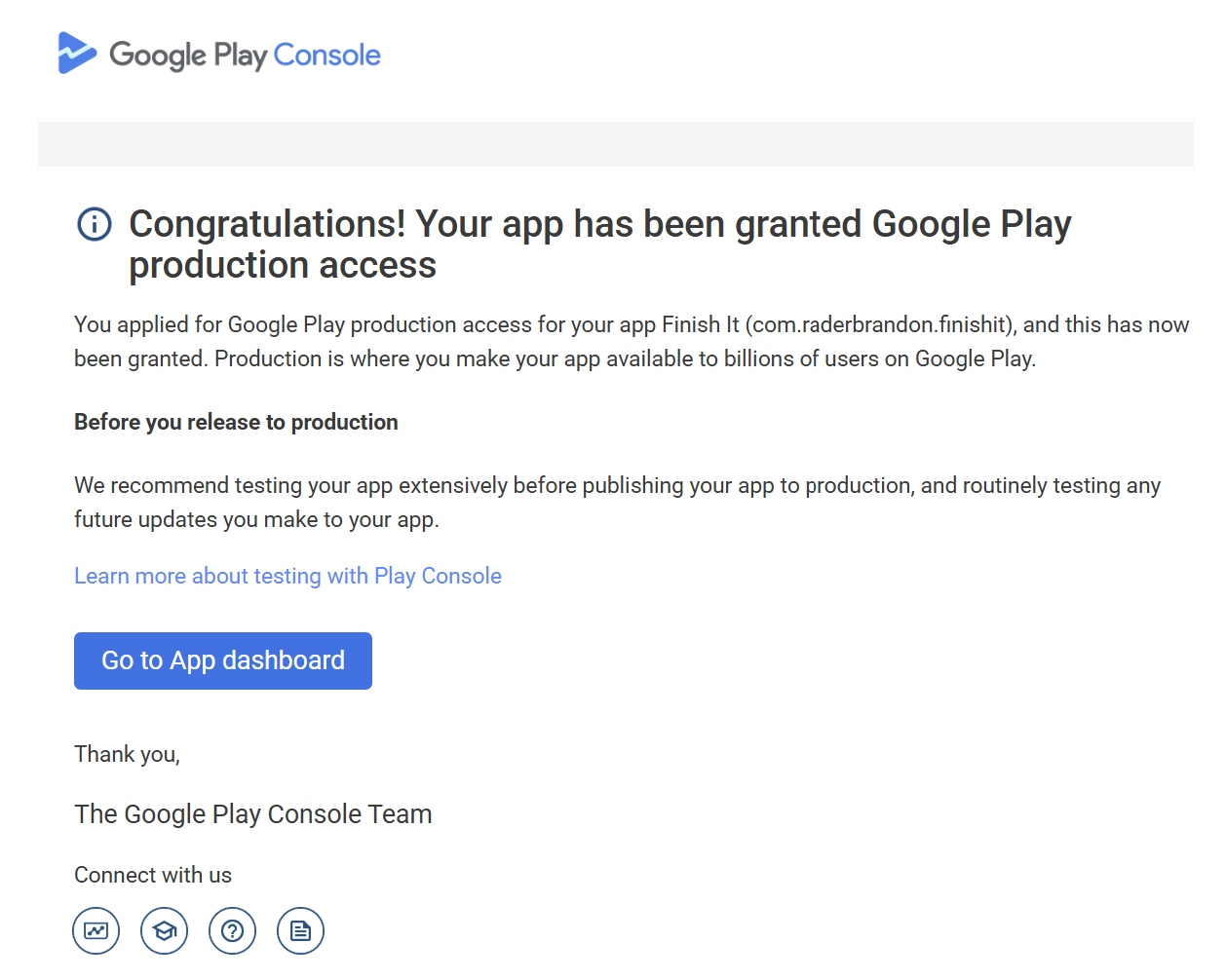
Quality QA Testing Reports
Clear, actionable reports with screenshots and evidence for every important issue found during testing.
Real Device Testing & Diagnostics
Real human testers use physical Android devices to test your app, verify real user flows, and provide clear testing evidence and professional QA reports.
Guaranteed App Approval
Get your Android build approved on the first try. We create an audit-ready compliance profile that proves thorough quality assurance.
Affordable Compliance Cycles
Transparent plans built to satisfy Google Play Console guidelines for your Android build.
Loading Packages
Please wait while we fetch the best options for your region...
Frequently Asked Questions
Everything you need to know about passing your closed testing requirements.