Play Store testers for 14-day Android closed testing in Denmark
Secure Play Store testers in Denmark for Android closed testing. Hire 12 testers for 14 days to get Play Console approval from Google Play testers.
Play Store Testers for 14-Day Android Closed Testing in Denmark
If you are an indie developer sitting in a cozy cafe in Copenhagen or a tech hub in Aarhus, putting the final touches on your brand-new Android app, you probably feel like the hardest part is over. You have spent months coding, fixing bugs, and polishing the user interface. You are finally ready to share your creation with the world. But then, you hit a brick wall. Google Play has a strict requirement before you can go live: you need real people to test your app for two solid weeks.
For many developers in Denmark, finding reliable Play Store testers for 14-day Android closed testing feels like trying to find bright sunshine in the middle of a Danish winter. Sure, you might ask your friends, family, or colleagues to help out. But getting them to actually download the app, keep it installed, and open it daily for two weeks is a completely different story. People get busy, they forget, or they just do not understand how important this phase is for your launch.
This guide is all about how you can smoothly navigate the Google Play Closed Testing requirements, avoid the dangerous trap of fake testers, and finally get your app published on the Play Store. Whether you are building a budget tracker, a local Danish travel guide, or the next big mobile game, understanding this testing phase is the key to your success.
Why Did Google Change the Rules?
A few years ago, anyone could upload an app to the Play Store with almost zero friction. While that was great for fast launches, it led to a massive flood of low-quality, buggy, and sometimes unsafe apps. Users were getting frustrated downloading apps that crashed on the first screen.
To protect the user experience, Google introduced the Play Store Closed Testing requirement for all new personal developer accounts created after November 2023. The rule is clear: you must have at least 20 opted-in testers who keep your app installed and actively test it for 14 consecutive days.
While some developers look for a smaller initial batch, like 12 Testers for 14 Days, to get a solid baseline of early feedback before scaling up, you still need to hit Google's mandatory numbers to unlock production access. This testing phase is not just a checkbox. Google actively monitors how testers interact with your app. They look at crash logs, Android Vitals, and daily engagement to decide if your app is ready for the public.
The Danger of Taking Shortcuts
When faced with this 14-day hurdle, many developers panic. The thought of waiting another two weeks and begging people to test their app leads them to look for shortcuts. You will find shady services online promising to deliver instant testers using bots or click farms.
This is the fastest way to get your Google developer account banned.
Google's algorithms are incredibly smart. They can easily tell the difference between a real human interacting with an app in Denmark and a bot running on an emulator halfway across the world. If Google detects unnatural behavior - like 20 devices installing the app at the exact same second and never actually touching the screen - your app will be rejected. Even worse, your entire developer account could be permanently suspended, wasting all the hard work you put into your project.
Real Human Testers
Genuine Engagement: Real users tap around, explore menus, and interact with your app naturally. This creates realistic usage data.
Valuable Feedback: Humans will tell you if a button is too small, if a translation to Danish feels unnatural, or if the app drains their battery.
Google Compliance: Natural usage patterns pass Google's automated checks without triggering any red flags.
Higher Approval Odds: Apps tested by real people usually sail through the final review process because the data proves the app is stable.
Fake Bot Testing
Predictable Patterns: Bots often click the exact same coordinates at the exact same time, which is an immediate red flag for Google.
Zero Useful Data: A bot cannot tell you if your user interface is confusing or if your onboarding process is too long.
Account Risk: Using emulators and fake accounts violates Google Play policies. You risk a lifetime ban from the platform.
Wasted Money: You might pay for a cheap bot service only to have your app rejected, meaning you have to start the testing phase all over again.
Why Localized Testing Matters
If your app is designed specifically for the Danish market, having testers from Denmark or Europe can be a massive advantage. Imagine you built an app that helps people find the best smørrebrød spots in Copenhagen. If all your testers are based in a country where the app is not relevant, they might not understand the context or how to properly use the features.
While Google does not strictly require all testers to be from your target country for the Closed Testing phase, having a localized testing group ensures that the feedback you receive is actually useful. Real users can spot cultural nuances, language errors in your Danish localization, and local network issues that you might have missed.
How to Gather Real Testers
If you want to do it yourself, gathering a group of dedicated testers takes effort. You cannot just post a link on social media and hope for the best. You need to actively recruit people who are willing to commit to the 14-day process.
Here are a few ways to find real people for your Play Store Closed Testing:
- Local Developer Communities: Reach out to local tech groups in Denmark. Platforms like Meetup or local Slack channels often have developers willing to swap testing favors. You test their app, they test yours.
- Reddit and Online Forums: Subreddits dedicated to Android development or specific app niches can be great places to find early adopters. Just be honest about your need for the 14-day commitment.
- Beta Testing Platforms: There are legitimate services that connect developers with real users who want to try new apps.
Struggling with the 14-Day Testing Requirement?
Skip the hassle of recruiting unreliable testers. Our professional fleet of real Android devices guarantees Google Play compliance in exactly 14 days. Zero bots. Zero emulators. 100% production approval guarantee.
Comparing Your Testing Options
When you are ready to start the 14-day clock, you generally have three paths you can take. You can try to do it all yourself, you can hire a professional service that provides real human testers, or you can risk using a cheap bot service. Let's look at how they compare.
| Feature | Professional Service | DIY Testing | Bots / Fake Testers |
|---|---|---|---|
| Real Human Engagement | Yes | Yes | No |
| Time Saved | High (Instant start) | Low (Takes weeks to recruit) | High (But risky) |
| Reliability | High (Guaranteed 14 days) | Low (Friends often drop out) | Low (Accounts get banned) |
| Useful Feedback | Yes | Yes | No |
| Risk of Account Ban | Safe | Safe | Extremely High |
| Cost | Moderate | Free (Costs time) | Cheap |
As you can see, the DIY route is safe but incredibly time-consuming. Relying on friends often ends in frustration when day 8 rolls around and half of them have uninstalled your app to save storage space. A professional service takes the headache away by ensuring the testers actually complete the 14-day requirement.
Preparing Your App for Closed Testing
Before you invite a single tester, your app needs to be ready. Google will review your app before it enters the closed testing track, so it cannot be a broken prototype. It needs to look and feel like a finished product, even if you are still tweaking minor features.
App Store Listing
Technical Readiness
Google Play Console Setup
The Journey to Production Access
Getting your app from your laptop to the public Google Play Store is a journey. It requires patience and a clear understanding of the steps involved. Let's break down the exact roadmap you will follow during this testing phase.
Step 1: Upload to the Closed Testing Track
First, you will upload your App Bundle (.aab) to the Google Play Console under the Closed Testing track. You will need to fill out all the necessary store listing details and submit the app for an initial review. Google needs to approve the app before testers can even download it.
Step 2: Onboard Your Testers
Once approved, you will share your opt-in link with your testers. If you are aiming for the 12 Testers for 14 Days strategy to start, make sure they all opt-in on the same day. However, remember that Google ultimately requires 20 testers. They must click the link, accept the invitation, and download the app directly from the Play Store on their Android devices.
Step 3: The 14-Day Waiting Game
This is where patience is required. For 14 consecutive days, your testers must keep the app installed on their devices. They should open it occasionally, tap around, and generate natural usage data. You can monitor the active tester count in the Play Console to ensure no one drops out.
Step 4: Gather and Apply Feedback
During the testing phase, listen to your testers. If they report a bug, fix it! You can push updates to your app during the 14 days without resetting the clock. Showing Google that you actively maintain the app and respond to feedback is a huge positive signal.
Step 5: Apply for Production Access
Once the 14 days have passed and you have met all requirements, the "Apply for Production" button will unlock in your Play Console. You will need to answer a series of questions from Google about what you learned during testing and how you improved the app.
Step 6: Go Live!
Google will review your final submission. Because you used real human testers and generated natural data, your chances of approval are incredibly high. Once approved, you can finally publish your app to the public Play Store for users in Denmark and around the world!
Making the Most of Your Testing Period
The 14-day requirement might feel like an annoying delay, but it is actually a fantastic opportunity. Think of it as a soft launch. When you release an app to the public, negative reviews can kill your momentum on day one. By running a proper Google Play Closed Testing phase, you catch those embarrassing bugs before they impact your public rating.
If you are developing a game, use this time to check if the levels are too hard or if the tutorial makes sense. If you are building a utility app, see if users understand how to navigate the menus without getting frustrated. The feedback you get from real users during these two weeks is invaluable.
It is also important to engage with your testers. If you are using a dedicated group or a professional service, ask them specific questions. Do not just ask "Do you like the app?" Ask them what they found confusing, what feature they wish existed, and if they experienced any battery drain. This level of detail will help you write a much stronger application for production access when the 14 days are over. Google wants to see that you actually learned something from the testing phase.
Overcoming Common Rejection Reasons
Even after waiting 14 days, some developers get rejected when they apply for production access. Why does this happen? Usually, it is because they did not take the testing phase seriously.
If you use fake testers, Google will reject you for unnatural behavior. If you do not answer Google's questions thoroughly at the end of the 14 days, they might reject you for lacking a genuine testing process. When Google asks what you changed based on feedback, do not just write "Fixed bugs." Be specific. Write something like, "Testers reported that the login button was hard to see on smaller screens, so we increased the contrast and padding in version 1.0.2."
Another common reason for rejection is poor app stability. If your app crashes every time a user opens a specific menu, Google's automated systems will flag the high crash rate in your Android Vitals. This is why having real testers who actually use the app is so important - they help you find and fix these crashes before Google reviews your final submission.
Conclusion
Releasing an Android app is a huge milestone. Do not let the 14-day testing requirement discourage you. By understanding the rules, avoiding risky shortcuts, and focusing on real human feedback, you can successfully navigate the Play Store Closed Testing phase. Whether you are a solo indie developer in Denmark or part of a larger team, doing this right sets the foundation for a successful, stable, and highly-rated app. Embrace the process, listen to your testers, and get ready for a great launch.
Do I really need 20 testers, or is 12 enough?
While you might hear developers talk about '12 Testers for 14 Days' as an initial goal for gathering feedback, Google's strict policy requires a minimum of 20 opted-in testers for 14 consecutive days before you can apply for production access. It is best to aim for a few extra testers (like 25) just in case someone uninstalls the app by accident.
Can testers be from anywhere, or do they need to be in Denmark?
Google does not require testers to be from the same country where the developer is located or where the app is targeting. Testers from anywhere in the world count toward the 20-user requirement. However, having local testers can provide better feedback on cultural relevance and localization.
What happens if a tester uninstalls the app on day 10?
If your total number of active testers drops below the required 20, the 14-day clock might pause or you risk failing the requirement. This is why relying on friends and family can be risky, and why many developers choose professional services that guarantee testers will keep the app installed for the full duration.
Can I update my app during the 14-day testing period?
Yes! In fact, Google encourages it. Pushing updates based on tester feedback shows Google that you are actively maintaining the app and using the Closed Testing phase correctly. Updating the app does not restart your 14-day clock, as long as the testers keep the app installed.
How does Google know if I use fake bots for testing?
Google has incredibly sophisticated fraud detection systems. They monitor device types, IP addresses, usage patterns, and engagement metrics. If 20 identical devices log in at the same time and do not interact with the screen naturally, Google will flag it as fake activity and likely ban your account.
How We Deliver 12 Testers
A straightforward 4-step process to get your Android app approved.
Connect Account
Connect your Google account and choose your preferred closed testing package for your Android app.
Assign Testers
Share your Play Store opt-in URL. We immediately deploy 12 real testers to launch and review your Android app daily.
Daily QA Runs
Our crew initiates daily launch sessions on physical devices, verifying usability and logging crashes for your Android app.
Launch Ready
We continuously perform closed app testing for 14 days to help you meet Google Play production requirements. We also provide a compliance report.
Our Testing Infrastructure
Deploy your Android app onto real retail-grade handsets using our secure laboratory environment.
The 14-Day Production Guarantee
We complete the required 14-day closed testing process with real human testers and physical Android devices, while providing clear testing evidence and documentation throughout the process.
If Google specifically rejects production access due to insufficient testing engagement, you are covered by our free re-run or 100% refund guarantee, subject to our Refund Policy.
Verified Production Access
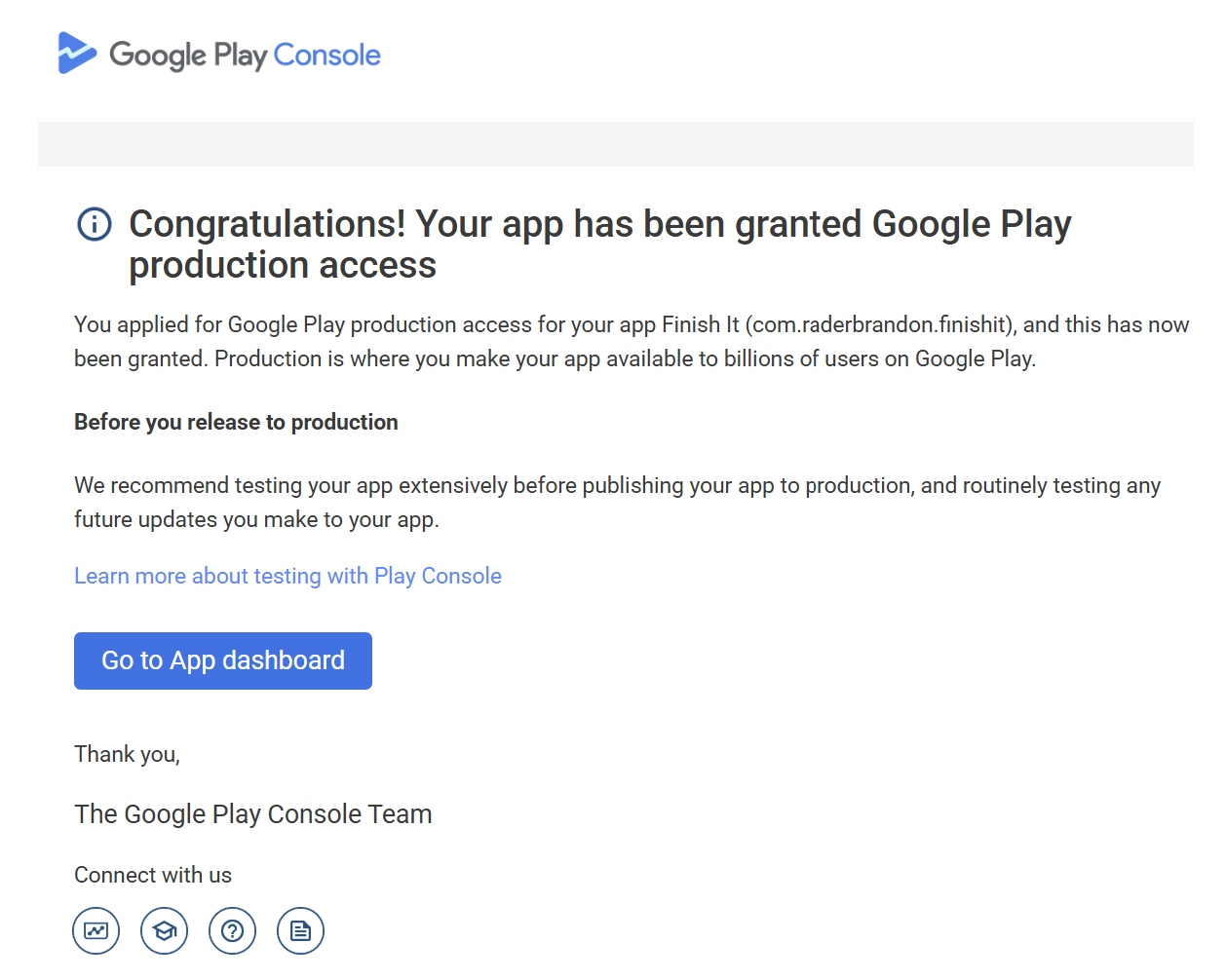
Quality QA Testing Reports
Clear, actionable reports with screenshots and evidence for every important issue found during testing.
Real Device Testing & Diagnostics
Real human testers use physical Android devices to test your app, verify real user flows, and provide clear testing evidence and professional QA reports.
Compliance Audit Passed
Transition your Android app to public production access with confidence. We deliver verified session logs and compliant Console activity.
One Cycle. Complete Approval.
Choose the ideal closed testing cycle for your Android release.
Loading Packages
Please wait while we fetch the best options for your region...
Frequently Asked Questions
Everything you need to know about passing your closed testing requirements.