Play Store testers for 14-day Android closed testing in Jamaica
Find Play Store testers in Jamaica for 14-day Google Play closed testing. Fulfill Play Console requirements with 12 real testers and launch quickly.
Navigating Google Play Closed Testing for Jamaican Android Developers
Jamaica is rapidly developing as a vibrant digital innovation hub within the Caribbean. Talented software engineers, startup founders, and independent app creators across Kingston, Montego Bay, Mandeville, and Spanish Town are actively building world-class mobile solutions. From next-generation Caribbean fintech wallets, remittance trackers, and Jamaican Dollar (JMD) financial services to vibrant tourism portals, e-commerce storefronts, and logistics platforms, Jamaican developers are shipping impactful applications. However, publishing a new Android app to production on Google Play requires satisfying a strict, non-negotiable review gate. For all personal developer accounts created after November 2023, Google mandates that creators successfully complete a closed testing phase with at least 12 opt-in testers continuously engaged for 14 uninterrupted calendar days before production track access is granted.
Securing 12 dependable, active testers across authentic physical Android devices presents a serious operational challenge for developers in Jamaica. Relying on friends, coworkers, university peers, or social media groups often ends in silent dropouts, skipped days, and premature uninstalls that break the evaluation chain. When your active count falls below the compliance threshold, Google Play Console pauses or resets the testing timer, delaying your launch by weeks. Overcoming this hurdle requires a disciplined testing strategy featuring verified physical hardware, realistic network simulations across Caribbean carriers like Digicel and Flow, and genuine user engagement that satisfies Google automated telemetry analysis.
Understanding the 12 Testers for 14 Days Mandate
Google established the closed testing requirement to eliminate low-quality, buggy, and fraudulent apps from flooding the store. To qualify for open production release, personal developer accounts must recruit a minimum of 12 distinct Google accounts. Each participant must accept the closed testing invite, download your signed Android App Bundle (AAB) via Google Play, and keep the application installed on a physical Android device across 14 consecutive calendar days.
Meeting this standard requires continuous, authentic engagement rather than a one-time install. Google Play Console backend algorithms constantly track telemetry signals, including daily active device metrics, install persistence, crash frequencies, and session activity. If testers uninstall the app early, fail to launch it, or use emulator-based scripts, Google review system flags the test as artificial, resetting the 14-day clock or outright denying production access during final evaluation.
Unique Testing Challenges in the Jamaican Market
Android developers building apps for Jamaica and international audiences encounter specific regional and technical hurdles during their closed testing journey:
- Diverse Hardware and OEM Device Fragmentation: The Jamaican mobile smartphone landscape consists of a wide mix of budget, mid-range, and flagship devices from brands such as Samsung, Xiaomi, Tecno, Infinix, and Motorola. Testing only on a few high-end developer phones leaves critical OEM-specific layout glitches, aggressive background memory managers, and screen density bugs undiscovered.
- Caribbean Cellular Network Variability: Mobile apps targeting users across Jamaica must maintain smooth functionality across fluctuating mobile connections, transitioning between urban broadband, 4G LTE, and rural 3G bands provided by Digicel and Flow Jamaica. Testing must verify that offline caching, network timeouts, and background synchronizations handle unstable connectivity without throwing unhandled exceptions or UI freezes.
- Tester Inactivity and High Attrition Rates: Casual acquaintances and volunteer testers frequently download an app on Day 1 and never open it again. When Google Play Console detects flatlined telemetry and zero daily sessions between Day 3 and Day 14, automated review systems conclude that genuine testing did not occur.
- Severe Account Risks from Automated Bot Farms: Purchasing low-cost bot installs or fake opt-in packages from unvetted freelance websites directly violates Google Play Developer Program Policies. Google Play Protect easily identifies synthetic emulator clusters, datacenters, and synchronized script actions, leading to rejected production requests or permanent developer account suspensions.
- Local Currency and Fintech Integrations: Apps handling Jamaican Dollar (JMD) transactions, mobile wallet top-ups, local tax rules (GCT), or banking APIs need thorough real-world usability testing to catch currency parsing bugs, UI overflow on localized amounts, and security check errors before real funds are processed.
Real Physical Testers vs. Automated Bot Farms
Selecting the right testing path makes the difference between earning prompt production approval and dealing with months of frustrating rejection notices.
Real Human Testers (Safe & Compliant)
- Real physical Android smartphones operating Android 10 through Android 15.
- Genuine user interactions including varied swipe gestures, authentic form entries, and organic navigation paths.
- Guaranteed 14-day opt-in retention with consistent daily opens and background sessions.
- Helpful user feedback, bug discoveries, and crash logs submitted through official Google Play feedback channels.
- Complete compliance with Google Play Developer Program Policies, protecting your developer standing.
Bot Farms & Fake Opt-in Services (High Risk)
- Rooted emulators, headless virtual devices, and suspicious proxy IP pools identified by Google Play Protect.
- Scripted, robotic click patterns and identical session durations that trigger fraud detection flags.
- High mid-test dropout rates and abrupt uninstalls that break the mandatory 14-day continuous requirement.
- Zero meaningful user feedback, interface reviews, or real-world stability data.
- Immediate rejection of production track applications and elevated risk of account termination.
Comparative Evaluation of Closed Testing Solutions
The table below highlights the key differences between our dedicated managed testing service, informal DIY testing, and risky automated bot networks.
| Feature / Metric | Managed Human Testing Service | DIY Internal Network | Automated Bot Farms |
|---|---|---|---|
| Verified Human Testers | 12+ real testers with aged Google accounts | Reliant on personal contacts | Zero (automated scripts) |
| Physical Hardware Breadth | Varied brands (Samsung, Xiaomi, Pixel, Tecno) | Limited to personal/office phones | Cloud emulators and virtual machines |
| 14-Day Continuous Retention | 100% guaranteed active retention | Frequent early uninstalls | Unpredictable drops and resets |
| Play Console Telemetry Quality | Organic opens, sessions, and vital metrics | Irregular or stagnant data points | Flagged as inorganic bot behavior |
| Developer Console Protection | Fully compliant with Google Play rules | Safe, but failure rate is high | Extreme risk of account suspension |
| Engineering Time Investment | Under 15 minutes of initial setup | 25 to 40 hours of manual follow-ups | High remediation and appeal overhead |
Struggling with the 14-Day Testing Requirement?
Skip the hassle of recruiting unreliable testers. Our professional fleet of real Android devices guarantees Google Play compliance in exactly 14 days. Zero bots. Zero emulators. 100% production approval guarantee.
Critical Play Console Telemetry & Android Vitals for Developers
Passing Google production access evaluation requires keeping a watchful eye on your Google Play Console dashboard. Google automated systems evaluate your closed test using strict quantitative stability thresholds:
- Daily Active Devices (DAD): Ensure active device counts remain steady across all 12+ opted-in devices throughout the entire 14-day timeframe. Significant drop-offs indicate poor retention and risk resetting your review progress.
- Opt-in Status and Persistence: Maintain continuous opt-in states for all participants via the web or mobile invite link. If opt-outs push your count below 12, Google system pauses the qualification counter until the deficit is corrected.
- Application Not Responding (ANR) Threshold: Keep your app user-perceived ANR rate strictly below Google bad behavior threshold of 0.47%. Heavy main-thread database queries, unoptimized JMD currency formatting loops, or synchronous network requests on slow Digicel/Flow data connections must be offloaded to background coroutines or worker threads.
- Fatal Crash Rate Threshold: Keep your overall crash rate below 1.09% across all supported Android operating systems and device configurations. Crashes occurring during splash screen initialization, third-party authentication flows, or payment gateway handoffs will instantly disqualify your production application.
- Background Wake Locks and Battery Drain: Avoid stuck partial wake locks and excessive background Wi-Fi/cellular scans. Android Vitals automatically flags apps causing battery drain while running in the background.
- Frame Rendering and Startup Latencies: Track slow rendering frames (exceeding 16ms) and frozen frames (exceeding 700ms) to ensure smooth scrolling and responsive UI transitions across budget hardware.
Pre-Launch Compliance Checklist for Jamaican Developers
Before concluding your closed testing cycle and submitting your production access request, confirm that your application satisfies every technical and operational benchmark.
Play Console Configuration and Security
Stability, Telemetry, and Launch Readiness
Step-by-Step Roadmap to Production Approval
Follow this proven step-by-step roadmap to guide your Android app from closed track initialization to live commercial launch on Google Play.
Closed Track Setup and AAB Deployment
Create your closed testing track within Google Play Console. Upload your signed release AAB, configure supported geographic markets including Jamaica and global regions, and generate your opt-in invite link.
Tester Onboarding and Program Opt-in
Invite 12+ verified human testers to your closed track. Testers accept the invitation via web or Android link, download the build directly from the Play Store, and verify proper initial onboarding.
14-Day Active Telemetry and Testing Cycle
Testers interact with your application daily across diverse physical Android devices, producing authentic touch gestures, session durations, and genuine network communication logs.
Telemetry Monitoring and Stability Patches
Review Android Vitals, crash analytics, and user reports. Push necessary bug fixes or performance improvements directly to the closed testing track without resetting the 14-day evaluation clock.
Production Access Submission and Launch
Upon finishing the continuous 14-day testing window, complete Google Play Console's production access questions with concrete testing feedback and deploy your application to live store users.
Frequently Asked Questions
Why does Google Play enforce the 12 testers for 14 days requirement for personal developer accounts?
Google introduced this strict policy in November 2023 to improve overall application quality and security across the Google Play Store. Requiring independent creators to execute a verified 14-day closed test with at least 12 real users ensures that new applications are thoroughly evaluated on physical hardware for stability, usability, and policy compliance before reaching public store listings. This safeguards users from poorly optimized software, broken payment systems, and unexpected crashes.
Can Android developers in Jamaica recruit testers located in other countries?
Yes. Google Play allows closed testing participants from anywhere in the world, provided those countries are selected in your closed track availability settings. Including international testers who use diverse smartphone models and cellular carriers can strengthen your testing profile by proving your app performs reliably across diverse global environments.
What happens if a tester uninstalls the application before the 14-day period ends?
If a tester uninstalls the build or opts out of the program and your active tester count drops below 12, Google Play Console automated tracking may pause or reset the 14-day countdown. Professional testing services mitigate this hazard by deploying a buffer of 15 to 20 testers, keeping your count securely above the required baseline at all times.
Is it safe to push updates or bug fixes to the closed track during the 14 days?
Yes. Deploying update builds to your closed testing track during the 14-day cycle is fully supported and recommended by Google. Releasing hotfixes in response to tester feedback shows active maintenance and continuous quality improvement, which positively influences your production access review.
How does Google Play detect automated bot farms and fake testing services?
Google Play Protect and Play Console backend diagnostics analyze device hardware identifiers, battery and sensor behavior, touch movement variance, Google account age, and IP network origins. Emulators, headless scripts, and bot farms exhibit rigid, unnatural interaction patterns that trigger fraud detection mechanisms, leading to application rejection or developer account bans.
What questions does Google ask when applying for production access after 14 days?
When you apply for production access, Google presents a questionnaire asking: how you recruited your testers, what feedback you collected during the testing phase, what specific changes or fixes you made based on user input, and why you believe the app is ready for open release. Providing clear, concrete answers backed by actual testing data ensures a swift and successful approval.
Our QA Process
A straightforward 4-step process to get your Android app approved.
Choose Package
Connect your Google account and choose your preferred closed testing package for your Android app.
Submit Link
Share your Play Store opt-in URL. We immediately deploy 12 real testers to launch and review your Android app daily.
Active Testing
Our crew initiates daily launch sessions on physical devices, verifying usability and logging crashes for your Android app.
Get Approved
We continuously perform closed app testing for 14 days to help you meet Google Play production requirements. We also provide a compliance report.
The Premium QA Advantage
Deploy your Android app onto real retail-grade handsets using our secure laboratory environment.
The 14-Day Production Guarantee
We complete the required 14-day closed testing process with real human testers and physical Android devices, while providing clear testing evidence and documentation throughout the process.
If Google specifically rejects production access due to insufficient testing engagement, you are covered by our free re-run or 100% refund guarantee, subject to our Refund Policy.
Verified Production Access
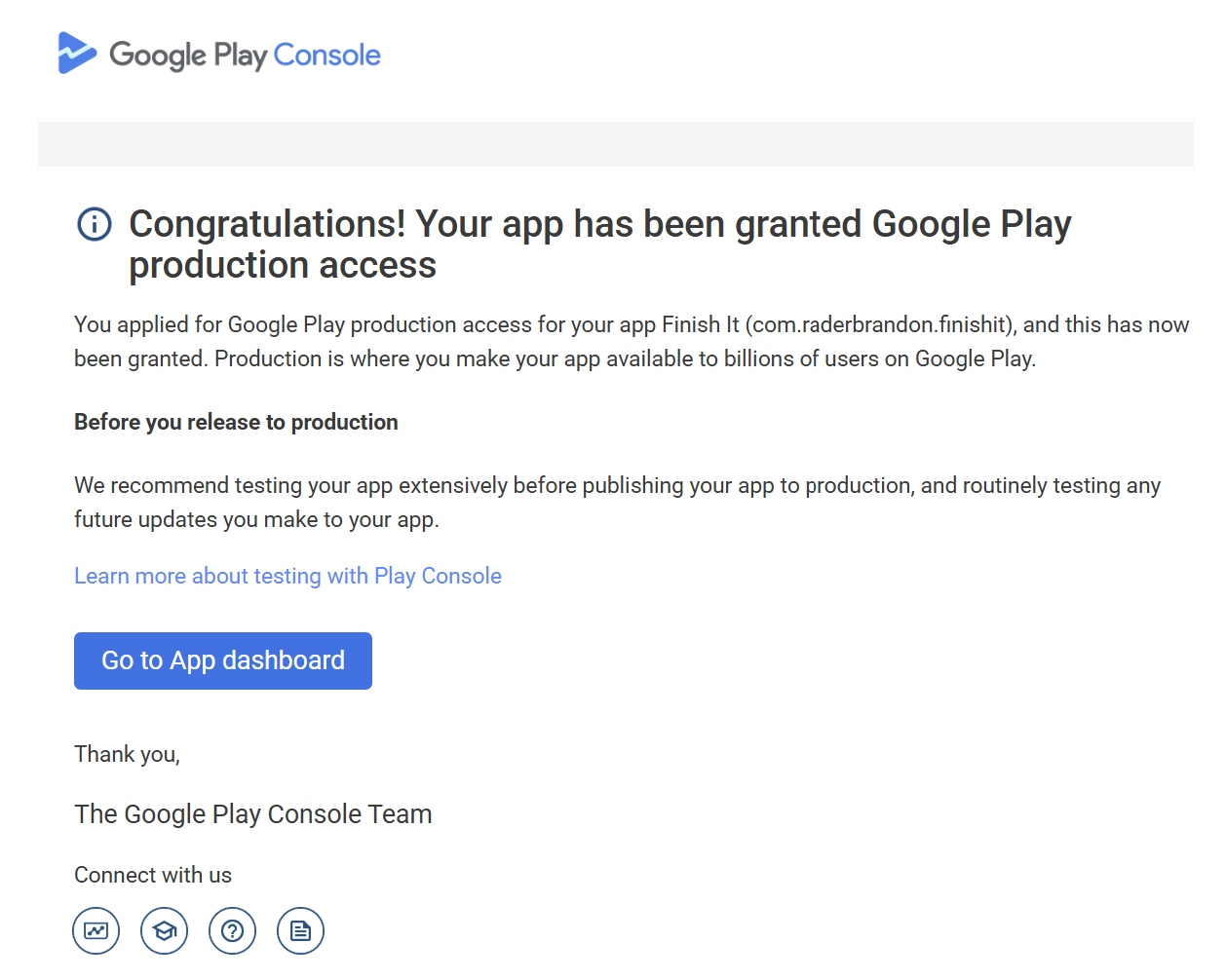
Quality QA Testing Reports
Clear, actionable reports with screenshots and evidence for every important issue found during testing.
Real Device Testing & Diagnostics
Real human testers use physical Android devices to test your app, verify real user flows, and provide clear testing evidence and professional QA reports.
Production Access Secured
Transition your Android app to public production access with confidence. We deliver verified session logs and compliant Console activity.
One Cycle. Complete Approval.
Choose the ideal closed testing cycle for your Android release.
Loading Packages
Please wait while we fetch the best options for your region...
Frequently Asked Questions
Everything you need to know about passing your closed testing requirements.