Play Store testers for 14-day Android closed testing in Luxembourg
Find Play Store testers in Luxembourg for 14-day Google Play closed testing. Fulfill Play Console requirements with 12 real testers and launch quickly.
The Google Play 14-Day Closed Testing Rule Explained
In late 2023, Google introduced stricter verification policies for new personal developer accounts to eliminate low-quality, untested releases from the Play Store. Under these rules, developers cannot immediately push their apps to open testing or production. Instead, you must set up a closed testing track and recruit a minimum of 12 distinct testers who maintain active opt-in status across 14 consecutive calendar days.
[Release Build on Closed Track]
       │
       ▼
[Recruit 12+ Real Testers] ──▶ [14 Days Continuous Opt-In & Active Usage]
       │
       ▼
[Submit Production Access Request] ──▶ [Google Human + AI Review] ──▶ [Production Launch]
During this test window, Google evaluates several backend data signals:
- Continuous opt-in retention across all 14 days without drops.
- Daily active session pings and foreground app interactions.
- Android vitals, including Crash Rates below 1.09% and ANR (Application Not Responding) rates below 0.47%.
- Real user feedback submitted directly through the Play Store opt-in channel.
- Complete answers to the production application questionnaire regarding your testing process.
If your testing pool drops below 12 active participants at any point, the 14-day counter can reset back to day one. Furthermore, if Google review systems detect simulated activity, emulated hardware farms, or zero engagement, your request for production access will be rejected. This leaves your release in limbo and forces you to restart another 14-day cycle from scratch.
Why Luxembourg Android Developers Face Unique Testing Challenges
Developing software in Luxembourg means catering to a highly sophisticated, multilingual, and security-conscious demographic. Between the banking core in Kirchberg and the thriving tech research facilities in Belval, apps built here often feature advanced security architectures, complex cross-border financial APIs, and multi-language interfaces covering French, German, English, and Luxembourgish.
Sourcing 12 reliable testers locally who represent varied Android device form factors, differing carrier networks (such as POST Luxembourg, Tango, and Orange), and varied Android OS versions (from Android 10 up to Android 15) is difficult for independent developers and lean teams. Relying on friends, co-workers, or family members usually results in test fatigue after two or three days. When testers stop opening the app or quietly uninstall it, your Play Console engagement score plummets.
Additionally, many engineering teams in Luxembourg build privacy-focused, cross-border solutions. Testing these builds requires testers who understand how to report localized UI glitches, font-rendering errors in multilingual layouts, and unexpected crashes when switching between cellular data and high-speed Wi-Fi networks.
Risks of Bot Networks & Swaps
- Emulated Devices: Bot farms use virtual devices that share identical hardware fingerprints and IP subnets, triggering Google automated fraud alerts.
- Engagement Drop-off: Free tester swap groups usually install the app on day one and never open it again, resulting in zero session telemetry.
- Reset Penalties: Missing even a single active tester can force Google Play Console to reset your 14-day testing clock.
- Production Rejections: When your production questionnaire is evaluated, Google reviewers check actual log data and reject accounts with inactive testing records.
- Account Strikes: Coordinated artificial installs from suspect accounts can lead to policy warnings or permanent Google Play developer account termination.
Benefits of Real Managed Testing
- 100% Real Physical Devices: Genuine testers using authentic smartphones and tablets running real Google accounts.
- Continuous 14-Day Engagement: Testers actively open, explore, and interact with your app throughout the full 14-day cycle.
- Zero Clock Resets: A buffer of 20+ testers ensures you always stay comfortably above the mandatory 12-tester threshold.
- Actionable Vitals & Feedback: Real users submit bug reports and performance feedback through official Play Store feedback channels.
- Guaranteed Production Approval: Complete session telemetry and high engagement give you the exact data needed to pass the Google production review.
What the Google Play Console Actually Evaluates
When your 14 days are complete and you click the button to apply for production access, your app does not simply receive an automatic green light. Instead, Google routes your account to a combined automated and human review pipeline.
Google evaluates three core pillars before granting production access:
1. Engagement and Telemetry Depth
Google does not publish exact formula metrics, but system logs monitor whether testers actually interact with your user interface. Automated crawlers review whether testers navigate screens, trigger network calls, save local preferences, and generate real runtime memory footprints. Having 12 devices open an app for two seconds on day one and remaining completely silent for thirteen days is a massive red flag.
2. Android Vitals and Performance Thresholds
The Play Console tracks your build against core technical quality thresholds. Your crash rate must stay well below the bad behavior threshold of 1.09%, and your ANR rate must not exceed 0.47%. Genuine testing on diverse hardware configurations allows you to catch memory leaks, UI thread bottlenecks, and device-specific rendering errors before Google reviewers inspect your vitals dashboard.
┌────────────────────────────────────────────────────────┐
│             CORE ANDROID VITALS THRESHOLDS             │
├───────────────────────┬────────────────────────────────┤
│ Metric                │ Google Max Allowed Threshold   │
├───────────────────────┼────────────────────────────────┤
│ User-Perceived Crash  │ Must remain below 1.09%        │
│ User-Perceived ANR    │ Must remain below 0.47%        │
│ Opt-in Retention Rate │ 100% (Minimum 12 active users) │
└───────────────────────┴────────────────────────────────┘
3. Production Readiness Application Answers
After 14 days, you must fill out a detailed questionnaire inside the Play Console explaining:
- How you recruited your testers.
- What specific feedback you gathered during the closed test.
- What changes, bug fixes, or performance optimizations you made based on that feedback.
- Why you believe your app is ready for global distribution.
If you used bot rings or unmanaged groups, you will have no meaningful feedback to reference, making it nearly impossible to provide convincing answers. A managed testing service provides detailed user feedback logs that make answering this questionnaire straightforward and credible.
Struggling with the 14-Day Testing Requirement?
Skip the hassle of recruiting unreliable testers. Our professional fleet of real Android devices guarantees Google Play compliance in exactly 14 days. Zero bots. Zero emulators. 100% production approval guarantee.
Comparing Testing Methods: Managed vs. DIY vs. Bot Services
Choosing how to fulfill your 14-day closed testing requirement will dictate whether your app launches smoothly on schedule or gets trapped in repeated cycles of delays and rejections.
| Feature / Metric | Managed Testing Service | DIY (Friends & Family) | Tester Swap Groups | Automated Bot Networks |
|---|---|---|---|---|
| Real Physical Hardware | 100% Genuine Devices | Genuine Devices | Mixed / Emulators | 0% (Emulated Hardware) |
| Tester Retention (14 Days) | Guaranteed 100% | High Drop-off Rate | Massive Drop-off | Artificial / Scripted |
| Active Daily Engagement | Verified Daily Sessions | Spotty / Forgetful | None After Day 1 | Scripted Fingerprints |
| Backup Tester Buffer | Yes (20+ Assigned) | None (High Risk) | None | None |
| Actionable User Feedback | Detailed Bug & UX Logs | Casual / Vague | None | None |
| Play Console Compliance | Fully Compliant | Compliant (If Active) | High Rejection Risk | Account Ban Risk |
| Production Pass Rate | >99% on First Try | ~35% on First Try | <15% on First Try | 0% (Flagged by Review) |
Pre-Launch Closed Testing Preparation Checklist
Before deploying your release build to the closed testing track, make sure your app package and developer console configurations satisfy all baseline prerequisites.
Technical Build & Manifest Configuration
Play Console Track & Privacy Setup
Step-by-Step Roadmap to Google Play Production Approval
Navigating the 14-day closed testing cycle requires a structured workflow. Follow this roadmap to progress smoothly from initial track release to live production status on Google Play.
Step 1: Deploy Release Candidate to Closed Track
Upload your production-ready Android App Bundle (.aab) to your closed testing track. Complete the release notes and rollout configuration, then submit the track for Google initial review.
Step 2: Recruit & Opt-in 12+ Verified Testers
Add your tester email list to the closed track. Distribute your private Play Store opt-in URL. Ensure at least 12 testers (ideally 20 for safety) accept the invitation and download the build onto their physical devices.
Step 3: Monitor 14 Days of Active Engagement
Keep the 14-day testing period active without interruptions. Monitor your daily active users and Android Vitals in the Play Console to confirm consistent telemetry and crash-free rates.
Step 4: Collect Feedback & Push Incremental Updates
Gather qualitative feedback on user interface flows, edge-case bugs, and device-specific quirks. If needed, push bug-fix updates directly to the closed track to demonstrate continuous development.
Step 5: Complete Production Access Application
Once the 14-day countdown finishes, access the 'Apply for Production' section. Fill out the application questionnaire using concrete examples of tester feedback, bug resolutions, and testing insights.
Step 6: Production Approval & Public Launch
Google reviews your engagement logs and questionnaire. Upon approval, promote your closed track build directly to the Production track to make your app globally available to real users.
Best Practices for Maintaining High Vitals During Testing
Keeping your application stable during the 14-day testing window is essential for passing Google production audit. Here are practical engineering practices to safeguard your vitals:
- Implement Robust Error Boundaries: Wrap asynchronous networking calls, background sync workers, and third-party SDK initializations in resilient try-catch routines to prevent fatal uncaught exceptions.
- Optimize Background Workloads: Avoid running heavy computations or continuous database writes on the main UI thread. Use Kotlin Coroutines with Dispatchers.IO or Android WorkManager for deferrable background jobs.
- Monitor Memory Footprints: Audit your bitmap allocations, cache stores, and long-lived singleton instances to prevent OutOfMemory errors on lower-tier Android devices.
- Graceful Network Handling: Support smooth state transitions when a user moves between 5G, 4G, and offline modes, displaying clear UI feedback rather than freezing or crashing.
- Analyze ProGuard / R8 Rules: Test your obfuscated release builds locally to make sure code shrinking does not accidentally strip reflection-dependent serialization classes or API models.
Frequently Asked Questions
Why does Google require 12 testers for 14 continuous days for new accounts?
Google introduced this requirement to elevate the overall quality and stability of apps published on the Play Store. By mandating a 14-day closed testing window with at least 12 real testers, Google ensures that developers thoroughly validate their software on diverse physical devices, catch critical crashes, and collect real user feedback before opening their app to the public.
What happens if a tester uninstalls the app or opts out during the 14 days?
If a tester opts out or uninstalls the app and your active tester count drops below the mandatory threshold of 12, Google automated system may pause or reset the 14-day timer. This is why we recommend maintaining a buffer of at least 20 opted-in testers so that unexpected uninstalls never jeopardize your testing timeline.
Can I use automated bots or emulator farms to satisfy the 14-day test?
No. Google Play Console uses advanced behavioral heuristics, device integrity signals, and Play Services telemetry to detect emulated environments and automated interaction scripts. Using bot services will result in immediate rejection of your production access request and can lead to permanent suspension of your Google Play developer account.
How should I answer the Google Play production access questionnaire?
You must provide genuine, detailed responses outlining how you organized your closed testing track, the specific channels you used to collect feedback, the recurring issues or bugs identified by testers, and the exact code or UI adjustments you implemented in response. Concrete technical details and realistic testing insights are critical for securing approval.
Can I push build updates to the closed track while the 14-day timer is running?
Yes, you can and should release updates if you fix bugs or improve features during the test. In fact, releasing incremental updates during the 14-day window demonstrates active maintenance and continuous improvement to Google review team, which positively influences your production access evaluation.
How does our managed testing service guarantee production access approval?
Our service provides a dedicated group of 20+ verified human testers using real physical Android devices across various hardware profiles and OS versions. We guarantee continuous 14-day opt-in retention, verified daily engagement, zero clock resets, and actionable bug reports, giving your app the exact telemetry and feedback data required to pass Google production review on your first attempt.
How We Deliver 12 Testers
A straightforward 4-step process to get your Android app approved.
Connect Account
Connect your Google account and choose your preferred closed testing package for your Android app.
Assign Testers
Share your Play Store opt-in URL. We immediately deploy 12 real testers to launch and review your Android app daily.
Daily QA Runs
Our crew initiates daily launch sessions on physical devices, verifying usability and logging crashes for your Android app.
Launch Ready
We continuously perform closed app testing for 14 days to help you meet Google Play production requirements. We also provide a compliance report.
Our Testing Infrastructure
Deploy your Android app onto real retail-grade handsets using our secure laboratory environment.
The 14-Day Production Guarantee
We complete the required 14-day closed testing process with real human testers and physical Android devices, while providing clear testing evidence and documentation throughout the process.
If Google specifically rejects production access due to insufficient testing engagement, you are covered by our free re-run or 100% refund guarantee, subject to our Refund Policy.
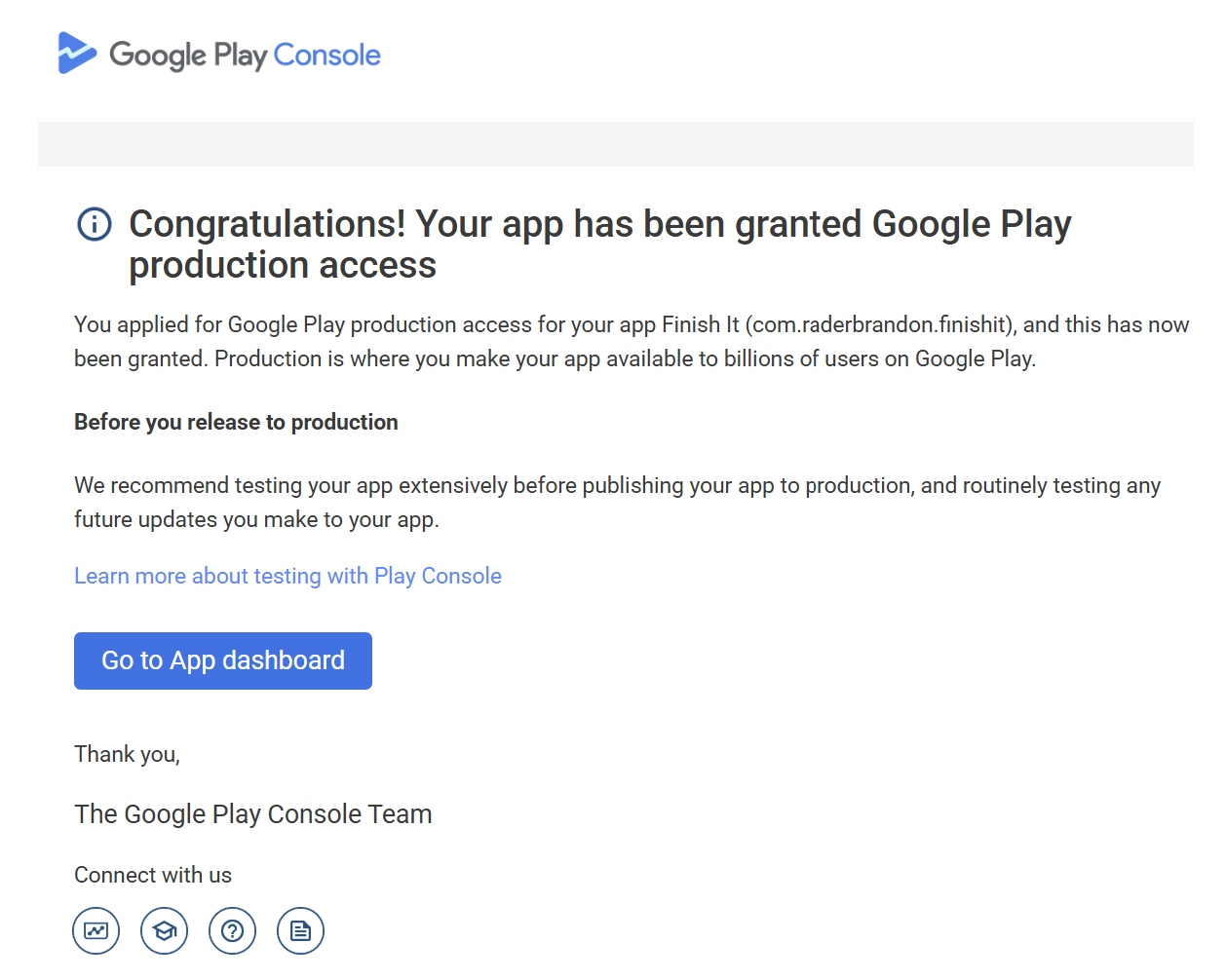
Verified Production Access
Quality QA Testing Reports
Clear, actionable reports with screenshots and evidence for every important issue found during testing.
Real Device Testing & Diagnostics
Real human testers use physical Android devices to test your app, verify real user flows, and provide clear testing evidence and professional QA reports.
Compliance Audit Passed
Transition your Android app to public production access with confidence. We deliver verified session logs and compliant Console activity.
One Cycle. Complete Approval.
Choose the ideal closed testing cycle for your Android release.
Loading Packages
Please wait while we fetch the best options for your region...
Frequently Asked Questions
Everything you need to know about passing your closed testing requirements.