Play Store testers for 14-day Android closed testing in Moldova
Find Play Store testers in Moldova for 14-day Google Play closed testing. Fulfill Play Console requirements with 12 real testers and launch quickly.
Why 12 Active Testers Are Mandatory for Google Play
The requirement for 12 continuous testers over a 14-day testing period was introduced to eliminate low-effort, broken, or insecure apps from flooding the store. Google Play closed testing evaluates whether an application is genuinely stable and usable before granting production release permissions. The algorithms inside the Google Play Console actively track daily active installations, crash reports, Application Not Responding (ANR) events, and session frequency.
For engineering teams and indie founders based in Moldova, fulfilling this testing process with real physical devices across local carriers such as Orange Moldova, Moldcell, and Moldtelecom proves regional reliability. When real people launch your build daily, the console records authentic telemetry that satisfies the strict review criteria enforced by the Google Play review team.
The Pitfalls and Friction of DIY Community Testing
Many indie creators attempt to satisfy the 12 testers for 14 days rule by asking friends, family members, or peers in local tech forums. While early enthusiasm often leads to quick opt-ins on day one, natural tester fatigue sets in within 48 to 72 hours. Volunteers forget to open the app, mute test notifications, or uninstall the build entirely to free up storage on their personal phones.
If your active tester count dips below the required threshold of 12 active participants at any point during the 14-day cycle, Google's automated clock can stall or reset. Finding replacements mid-stream prolongs your release timeline and adds administrative stress. Relying on an unmanaged cohort turns what should be a straightforward pre-launch milestone into weeks of chasing down casual users.
Critical Play Console Metrics Monitored During Testing
During the 14-day closed testing process, the Google Play Console runs background diagnostics on every enrolled device. Knowing what the review algorithms monitor helps you build a more resilient release and pass production review smoothly.
[Play Console Telemetry Pipeline]
        │
        ├── User Engagement (Session length, screen switches, genuine touch events)
        ├── Stability Metrics (Crash rate < 1.09%, ANR rate < 0.47% per vitals)
        ├── Hardware Variety (OEM brands, chipsets, RAM tiers, Android OS 9-16)
        └── Opt-In Integrity (Official Play Store web & mobile opt-in URLs)
The review pipeline focuses on four primary operational categories:
- Daily Session Frequency and Depth: Automated systems analyze whether test users open your application multiple times across the 14 days, navigate through distinct activities, and trigger user interface elements. Static open-and-close sessions that last only two seconds raise red flags in the Play Console algorithms.
- Android Vitals and Stability Thresholds: Your build must remain well below Google's bad behavior thresholds (specifically, keeping crash rates under 1.09% and ANR rates under 0.47%). Every uncaught exception or ANR event generated during testing is logged against your package name.
- Hardware and OS Diversity: Google expects to see your app tested across varied screen aspect ratios, processor architectures (ARM64, ARMv7), RAM capacities, and Android operating system versions ranging from Android 9 through Android 16.
- Organic Opt-In Retention: Testers must join via official Google Play closed testing opt-in links and keep the app installed throughout the two-week window without opting out.
Securing dedicated Play Store testers for 14-day Android closed testing in Moldova gives you peace of mind that your engagement telemetry, crash statistics, and active opt-in numbers stay clean and consistent from day one to day fourteen.
The Hidden Hazards of Bots and Emulator Farms
Some developers consider buying automated testing services or bot click farms to cut corners. Using synthetic bots, automated scripts, or cloud-hosted emulators is one of the most dangerous decisions a developer can make for their Google Play account.
Google utilizes sophisticated heuristic engines to identify non-human traffic. Cloud datacenter IP addresses, identical hardware identifiers, virtualized sensor outputs, and repetitive touch coordinates are instantly flagged by Google's anti-abuse filters. When automated or fake testing is identified on your closed testing track, Google does not simply decline your application for production access. In most cases, the developer account is permanently suspended for deceptive behavior, and linked personal identities, payment methods, and connected developer consoles are permanently blacklisted.
Authentic human testing is not merely a box to check. It is an essential safeguard that protects your intellectual property and preserves your standing with Google Play.
Professional Managed Testing vs. Alternative Testing Methods
Understanding how different testing strategies compare helps you select the right approach for your release roadmap.
| Feature & Operational Metric | Dedicated Managed Testing Cohort | DIY Friends & Social Media Cohort | Automated Bots & Emulator Scripts |
|---|---|---|---|
| Production Access Approval | Guaranteed compliance with surplus testers | High risk of drop-offs and track resets | Immediate rejection and account termination |
| Tester Retention Over 14 Days | 100% continuous daily engagement | Declines sharply after 3 to 4 days | Simulated, detectable artificial pings |
| Device Spectrum & Diversity | 20+ real physical Android phones and tablets | Limited to whatever devices friends own | Emulated virtual devices on cloud servers |
| Actionable QA Feedback | Comprehensive bug, UI, and crash reports | Casual, non-technical or empty feedback | Zero meaningful user or bug insights |
| Developer Time Investment | Zero administrative overhead | Constant messaging, nagging, and reminders | Low setup effort, catastrophic account risk |
| Network & Carrier Authenticity | Real residential networks and regional carriers | Genuine local connections | Datacenter proxy IPs and VPN clusters |
Authentic Human Testing in Moldova
Real human testers across Moldova download your package through official Google Play Store opt-in links. They interact with your app daily on physical smartphones from Samsung, Xiaomi, Google Pixel, Motorola, and OnePlus. Their natural user activity generates authentic session logs, crash diagnostics, and genuine Android Vitals telemetry that satisfy Play Console compliance requirements.
Automated Scripts & Click Farms
Bot farms run repetitive Python or ADB scripts inside virtualized emulator instances on cloud server racks. Google's machine learning security layers immediately recognize the lack of gyroscopic movement, artificial click coordinates, and datacenter IP ranges, resulting in immediate production rejection and account bans.
Struggling with the 14-Day Testing Requirement?
Skip the hassle of recruiting unreliable testers. Our professional fleet of real Android devices guarantees Google Play compliance in exactly 14 days. Zero bots. Zero emulators. 100% production approval guarantee.
Step-by-Step Pre-Testing Preparation Checklist
Before inviting your testing cohort to your closed track, make sure your build and store presence meet all baseline technical standards. Follow this structured checklist to ensure your app is ready for testing.
Play Console Configuration & Track Setup
Set up an active Closed Testing track under the Testing section in Google Play Console, rather than using Internal or Open testing tracks.
Create an email list or link a dedicated Google Group containing all tester email addresses before creating your closed release build.
Fill out all required Store Presence sections, including Privacy Policy URL, App Content ratings, Data Safety questionnaires, and target audience declarations.
Verify that your closed testing track is configured for global availability or specific target regions so testers can install without geographic restrictions.
Technical Build & Stability Verification
Upload your build in Android App Bundle (.aab) format targeting the latest Android API level (API level 34 or higher as mandated by Google Play).
Test all deep links, OAuth login flows, and third-party authentication providers in release mode with ProGuard or R8 obfuscation enabled.
Verify that network fallback routines, offline caching, and error-handling screens render cleanly when connectivity fluctuates.
Ensure your package name, version codes, and signing certificates match your production configuration to avoid deployment mismatches later.
Tester Onboarding & Feedback Channels
Share the official Web Opt-in URL (play.google.com/apps/testing/your.package) and Android Opt-in URL with your assigned testing cohort.
Provide clear test login credentials, sandbox payment keys, or demo accounts if your app requires authentication or premium features.
Set up a dedicated feedback email or private community channel to collect real-time bug reports and UX suggestions throughout the 14 days.
Monitor the Play Console Android Vitals dashboard daily to catch and resolve any runtime crashes before they impact your overall stability score.
Your 14-Day Testing and Production Roadmap
Successfully completing the Google Play closed testing process follows a clear five-step journey from initial setup to full production rollout.
Track Configuration and Build Upload
Upload your signed Android App Bundle (.aab) to the Closed Testing track in your Google Play Console. Complete the Data Safety form, configure testing track access permissions, and submit the release for initial Google automated review. Once approved, the closed track status changes to active.
Tester Enrollment and App Installation
Distribute the official Google Play opt-in links to your 12+ human testers. Each tester accepts the testing invitation through their personal Google Play account, downloads the build directly from the Play Store onto their physical Android smartphone, and completes an initial onboarding session.
Active 14-Day Testing and Engagement Cycle
Testers interact with your app daily across the full 14-day testing period. They explore features, test push notifications, verify UI responsiveness, and trigger varied user flows. You monitor the Play Console dashboard to confirm that active device counts remain steady above the 12-tester baseline.
Diagnostic Review and Patch Iteration
Review feedback submitted by your testing team, analyze logged crash events in Android Vitals, and push incremental patch updates to the closed track if bugs are identified. Pushing updates during testing demonstrates active maintenance and developer responsiveness.
Production Access Application and Store Launch
After completing 14 continuous days with 12+ active testers, the 'Apply for Production' button unlocks inside your Google Play Console. Complete the written questionnaire detailing your testing methodology, feedback received, and improvements made. Once approved, publish your app to the public Play Store.
Frequently Asked Questions
Why does Google Play require 12 testers for 14 days on personal accounts?
In late 2023, Google updated its developer policies to improve app quality, security, and stability on the Play Store. Personal developer accounts registered after this date must conduct closed testing with at least 12 opt-in testers who maintain active installations for 14 continuous days. This requirement ensures that creators thoroughly test their software on real Android devices, resolve critical bugs, and gather authentic user feedback before making their applications available to the general public.
What happens if a tester uninstalls the app during the 14-day period?
If a tester uninstalls your application or leaves the closed testing track, your total active tester count drops. If your active count falls below the required threshold of 12 testers, Google's internal 14-day qualification timer may pause or completely reset. To prevent this, professional testing services assign surplus testers (typically 20 or more participants) so that your project consistently exceeds the minimum count every single day, even if an individual device experiences connectivity issues.
Can I use automated scripts, emulators, or bot services to pass testing?
No. Google Play uses sophisticated anti-abuse and telemetry detection algorithms that identify emulator fingerprints, static datacenter IP addresses, automated tap scripts, and synthetic engagement patterns. Using bot services or emulator farms violates Google Play Developer Program Policies and frequently results in immediate rejection of production access, suspension of your developer account, and permanent blacklisting of your developer credentials.
How should I answer the Production Access application questions after testing?
When you apply for production access after the 14-day closed testing period, Google asks specific questions about your testing process. You must clearly describe how you recruited your testers, summarize the specific feedback and bug reports you received, and explain the concrete adjustments or code fixes you implemented during the cycle. Providing detailed, honest, and technically sound answers demonstrates that you conducted genuine quality assurance, which dramatically increases your chances of first-time production approval.
Can I push build updates and bug fixes during the active 14-day testing window?
Yes. You can upload new Android App Bundle (.aab) releases to your closed testing track at any point during the 14-day cycle. Pushing bug fixes and feature improvements does not reset your 14-day counter. In fact, Google views active updates during closed testing as a positive indicator of responsive development and diligent software maintenance.
Why is managed closed testing better for developers in Moldova than DIY testing?
Organizing 12 reliable testers among personal contacts in Moldova often leads to high drop-off rates, missed daily sessions, and delayed launches. A professional managed testing service provides a dedicated cohort of real human testers on varied physical Android devices, guaranteed daily engagement, structured bug reports, and complete coverage. This eliminates administrative overhead and ensures your app fulfills all Google Play closed testing requirements on the first attempt.
Our QA Process
How we deploy real devices and guarantee compliance for your release.
Choose Package
Sign in with Google to configure the closed testing environment for your Android build.
Submit Link
Submit your Google Play Console testing link, and our team will assign qualified testers from our testing network to join your Android closed testing release.
Active Testing
A QA supervisor monitors daily check-ins, ensuring 12 unique Android users engage with your Android build every single day.
Get Approved
We guarantee 14 consecutive days of active user check-ins to satisfy Google's compliance policies, delivering an audit-ready PDF feedback report.
The Premium QA Advantage
Experience a next-generation testing infrastructure built for Google Play compliance for your Android release.
The 14-Day Production Guarantee
We complete the required 14-day closed testing process with real human testers and physical Android devices, while providing clear testing evidence and documentation throughout the process.
If Google specifically rejects production access due to insufficient testing engagement, you are covered by our free re-run or 100% refund guarantee, subject to our Refund Policy.
Verified Production Access
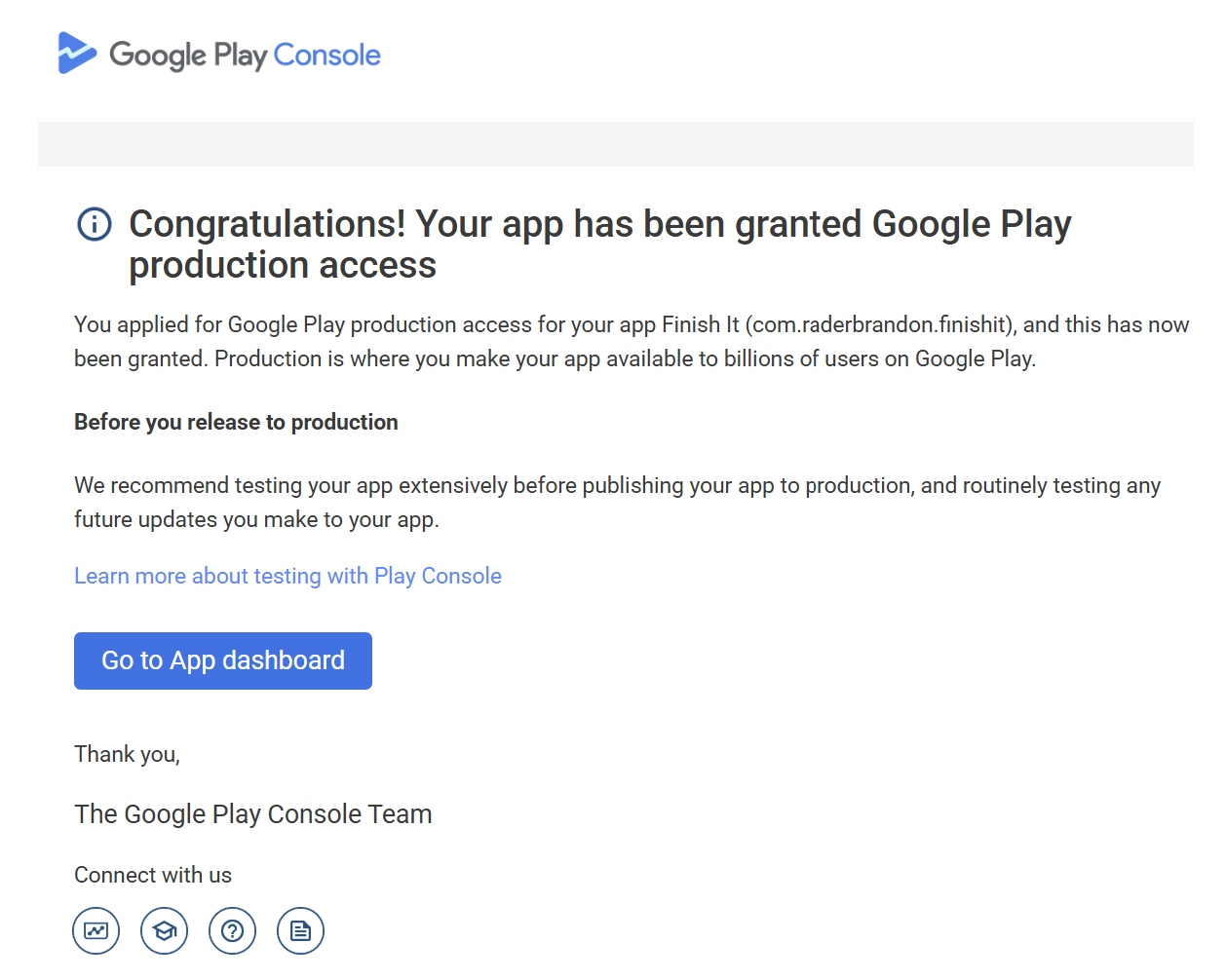
Quality QA Testing Reports
Clear, actionable reports with screenshots and evidence for every important issue found during testing.
Real Device Testing & Diagnostics
Real human testers use physical Android devices to test your app, verify real user flows, and provide clear testing evidence and professional QA reports.
Production Access Secured
Get your Android build approved on the first try. We create an audit-ready compliance profile that proves thorough quality assurance.
Affordable Compliance Cycles
Transparent plans built to satisfy Google Play Console guidelines for your Android build.
Loading Packages
Please wait while we fetch the best options for your region...
Frequently Asked Questions
Everything you need to know about passing your closed testing requirements.