Play Store testers for 14-day Android closed testing in Morocco
Find Play Store testers in Morocco for 14-day Google Play closed testing. Fulfill Play Console requirements with 12 real testers and launch quickly.
Navigating Google Play Closed Testing Requirements in Morocco
Google introduced the 14-day evaluation window to filter out abandoned prototypes and low-quality builds from flooding the Play Store. The requirement is not merely having names on an email opt-in list; it requires continuous app engagement across diverse Android devices, screen sizes, and operating system versions. In the Moroccan development ecosystem, where teams often target both domestic users on varying mobile networks (such as Maroc Telecom, Inwi, and Orange) and international markets across Europe, MENA, and North America, meeting these strict Play Console telemetry benchmarks can quickly consume weeks of engineering resources if managed manually.
The Hidden Roadblocks of DIY and Peer-to-Peer Testing Groups
Many developers in Morocco turn to casual developer groups on WhatsApp, local Discord servers, Facebook developer communities, or Reddit reciprocal testing threads. While these channels offer goodwill, they frequently lead to failed production reviews due to fundamental operational issues.
WhatsApp / Peer Ring Testing          Managed Real-Device Testing
┌──────────────────────────┐          ┌──────────────────────────┐
│ Unverified Opt-Ins       │          │ 12+ Verified Real Users  │
│ Drop-offs on Day 4 or 8  │   vs.    │ 14 Consecutive Days Active│
│ Zero Behavioral Logs     │          │ Crash Logs & UX Insights │
│ Rejected Production Apps │          │ High Production Approval │
└──────────────────────────┘          └──────────────────────────┘
- Tester Attrition and Uninstalls: A friend or peer might install your build on day one, but by day four they clean up their storage or simply stop opening the application. If your active count dips below the required threshold at any point during the 14 days, Google Play Console resets your review progress back to day zero.
- Device Farming and Emulator Detection: Google monitors device telemetry including Google Play Services signatures, network diversity, battery drain patterns, and screen interaction events. Peer groups and cheap bot networks often use virtualized instances or device farms with identical IP clusters, triggering automated fraud detection flags in the Play Console.
- Absence of Meaningful Feedback: Closed testing requires developers to demonstrate responsive iteration. When testing pools provide zero crash reports, bug logs, or user feedback, Google review teams often deny production release permissions on the grounds of insufficient pre-launch validation.
Peer Swaps & Automated Bots
- High churn rate where testers uninstall builds within 48 to 72 hours.
- Virtual emulators and duplicate Google accounts that trigger Play Console compliance flags.
- Zero bug logs, ANR insights, or localization feedback for French, Arabic, or English UI strings.
- Repeated rejections when submitting the production access questionnaire.
- Wasted weeks of development cycles with zero actionable analytical data.
Professional Managed Closed Testing
- Dedicated real humans running verified Android hardware for the full 14 days without drop-offs.
- Organic device telemetry with unique hardware profiles, carrier configurations, and OS versions.
- Detailed usability reports, screen flow validations, and crash diagnostics.
- Guaranteed compliance data that aligns with Google Play evaluation criteria.
- Clear, reproducible testing history ready for production questionnaire approval.
Comparing Android Closed Testing Strategies
Evaluating your rollout strategy early prevents costly launch delays. Here is how managed testing compares to DIY outreach, casual developer swaps, and risky bot farms.
| Strategy Metric | Managed Real Testers | DIY Friends & Family | Peer Swap Communities | Bot & Emulator Farms |
|---|---|---|---|---|
| Active Retention (14 Days) | 100% Guaranteed Active | High Drop-off (30-50%) | High Attrition (40-60%) | Fake Session Pings |
| Device Diversity | Multiple Brands, OS 10-15 | Limited Local Devices | Unverified Hardware | Virtual Emulators |
| Play Console Compliance | Full Compliance | Partial Compliance | High Risk of Reset | Account Suspension Risk |
| Telemetry & Log Depth | Real User Interactions | Minimal Interaction | Superficial Pings | Programmatic Scripts |
| Usability & Bug Feedback | Structured Written Reports | Verbal or Casual Notes | None or Low Quality | Synthetic / Nil |
| Production Approval Rate | 99% First-Time Pass | Moderate (Requires Reruns) | Low (Frequent Resets) | Near Zero / Rejected |
Struggling with the 14-Day Testing Requirement?
Skip the hassle of recruiting unreliable testers. Our professional fleet of real Android devices guarantees Google Play compliance in exactly 14 days. Zero bots. Zero emulators. 100% production approval guarantee.
How Google Evaluates Your 14-Day Closed Testing Data
Google Play automated systems and human reviewers evaluate specific telemetry signals before granting 20-tester or 12-tester closed testing sign-offs. Simply creating a closed track and inviting accounts is not enough; the Play Console evaluates backend metrics to confirm authentic user engagement.
1. Daily Active Engagement Signatures
Google monitors whether opt-in testers actually launch the app, navigate multiple activities, and trigger user sessions across distinct times of the day. A healthy testing profile displays steady daily active users (DAU) throughout the entire 14-day duration without sudden cliffs or artificial spikes.
2. Hardware and Carrier Diversity
Apps tested exclusively on a single Wi-Fi router or identical phone models appear suspicious to automated evaluation scripts. A legitimate closed testing run features a balanced cross-section of hardware (Samsung Galaxy, Xiaomi, Google Pixel, Oppo, Tecno) running on varied cellular data networks and home broadband connections.
3. Application Stability and Performance Metrics
Your closed testing phase should surface real-world edge cases. The Play Console tracks:
- Application Not Responding (ANR) Rates: Ensuring your main thread does not freeze during heavy network requests or image rendering.
- Crash Rates per User Session: Catching fatal exceptions on specific Android API levels before public users encounter them.
- Memory Footprint and Battery Drain: Observing how background services perform across varied device battery optimization profiles.
4. Direct Feedback and In-Console Responses
Testers must submit feedback via the private Play Store feedback channel or connected support links. Google reviewers check whether real human feedback was submitted and whether you published updated release bundles (AABs) addressing those findings during or immediately following the testing run.
Comprehensive Preparation Checklist for Moroccan Developers
Ensure your app package, Play Console configurations, and store listings are fully primed before recruiting closed testers.
Play Console Configuration & Build Integrity
Generate an optimized Android App Bundle (AAB) with R8 code shrinking and resource minification enabled.
Verify that targetSdkVersion meets the latest Google Play requirement (Android 14 / API level 34+).
Configure an email list or Google Group containing verified tester Google account IDs on your Closed Testing track.
Set track availability to Morocco and your intended target rollout countries in the Countries/Regions tab.
UX, Localization & Compliance Verification
Validate multi-language string handling for Darija, Modern Standard Arabic, French, and English layouts, including RTL (Right-to-Left) UI mirroring.
Host a public, fully compliant Privacy Policy URL addressing user data handling, analytics SDKs, and local privacy regulations.
Provide functional test login credentials in the App Access section if your application contains an authentication gate.
Implement Firebase Crashlytics or Play Console Vitals tracking to monitor real-time exception logs during testing.
The Step-by-Step Closed Testing Roadmap to Production
Follow this structured roadmap to move from closed track deployment to full production release without delays.
Step 1: Release Build Deployment
Upload your signed release AAB to the Closed Testing Track. Complete all Data Safety declarations, content rating questionnaires, and app access credentials so testers can access every feature without account creation blockers.
Step 2: Tester Onboarding & Opt-in Verification
Distribute the Play Store join-on-web and join-on-Android opt-in links to your verified testing group. Ensure all 12+ testers accept the invitation, download the build directly from the Play Store, and launch their initial session.
Step 3: 14 Consecutive Days of Active Testing
Maintain continuous daily interaction across the entire 14-day window. Testers explore screen flows, test offline/online network transitions, and exercise edge-case scenarios while Play Console logs active session telemetry.
Step 4: Iterative Updates & Bug Triaging
Review incoming bug submissions, crash logs, and ANR traces. Push at least one minor patch update during the testing period to demonstrate proactive maintenance and responsive development to Google reviewers.
Step 5: Production Access Application
Once the 14-day countdown completes and all compliance requirements are verified in the Play Console, fill out the production access questionnaire with concrete feedback details, resolution notes, and launch readiness metrics.
Frequently Asked Questions
Why does Google Play require 12 testers for 14 days for personal developer accounts?
In late 2023, Google updated its developer policies to ensure that newly registered personal developer accounts thoroughly validate their apps before publishing them to billions of global users. By mandating a minimum of 12 opt-in testers who maintain active access over 14 consecutive days, Google verifies that the application is stable, secure, free of critical bugs or crashes, and offers genuine utility. This closed testing period protects end users from broken software and helps developers discover device-specific defects early.
Can Moroccan developers test apps targeted at European or North American markets?
Yes. You can configure your closed testing track to include Morocco alongside any international target territories (such as France, Spain, the United States, Canada, or Gulf countries). However, testers must have their Google Play accounts configured to regions where your closed track is available. Utilizing a managed testing service ensures you have testers distributed across the appropriate geographic and carrier regions without facing regional availability restrictions on the Play Store.
What happens if a tester uninstalls the app on Day 7 of the 14-day testing period?
If your active tester count falls below the required threshold of 12 active participants at any point during the 14-day evaluation, Google Play Console will pause or reset your testing progress counter. To protect against accidental uninstalls or device changes, professional managed testing services assign extra reserve testers (typically 15 to 20 testers) so your active count remains securely above the minimum baseline throughout the entire 14-day run.
How should I answer the Play Console Production Access questionnaire after testing?
When applying for production access after completing the 14-day period, Google asks specific questions regarding your testing strategy, how you recruited testers, the nature of feedback collected, and how you improved your application based on user input. Provide clear, honest, and technical answers. Mention the specific device types tested, real user feedback received (such as UI contrast, navigation quirks, or localization tweaks in French/Arabic), and reference any update versions you published to resolve issues.
Why are bot testing services and emulators risky for Play Console accounts?
Bot farms and emulated test environments use scripted interactions from repetitive IP addresses or cloned device identifiers. Google Play Services actively tracks hardware integrity, device fingerprinting, and behavioral engagement patterns. When Google detects bot activity, it rejects your production access request and may flag your developer account for suspicious activity, risking permanent developer account termination.
Do I need to publish updates to my app during the 14-day closed testing window?
While pushing an update is not strictly required by hard code rules, releasing at least one updated version (AAB) during or right after testing is strongly recommended by Google. It provides clear, undeniable evidence to the review team that you actively gathered tester feedback, addressed edge cases, fixed UI issues or crashes, and iterated on your build to deliver a high-quality product ready for public production release.
Our QA Process
How we deploy real devices and guarantee compliance for your release.
Choose Package
Sign in with Google to configure the closed testing environment for your Android build.
Submit Link
Submit your Google Play Console testing link, and our team will assign qualified testers from our testing network to join your Android closed testing release.
Active Testing
A QA supervisor monitors daily check-ins, ensuring 12 unique Android users engage with your Android build every single day.
Get Approved
We guarantee 14 consecutive days of active user check-ins to satisfy Google's compliance policies, delivering an audit-ready PDF feedback report.
The Premium QA Advantage
Experience a next-generation testing infrastructure built for Google Play compliance for your Android release.
The 14-Day Production Guarantee
We complete the required 14-day closed testing process with real human testers and physical Android devices, while providing clear testing evidence and documentation throughout the process.
If Google specifically rejects production access due to insufficient testing engagement, you are covered by our free re-run or 100% refund guarantee, subject to our Refund Policy.
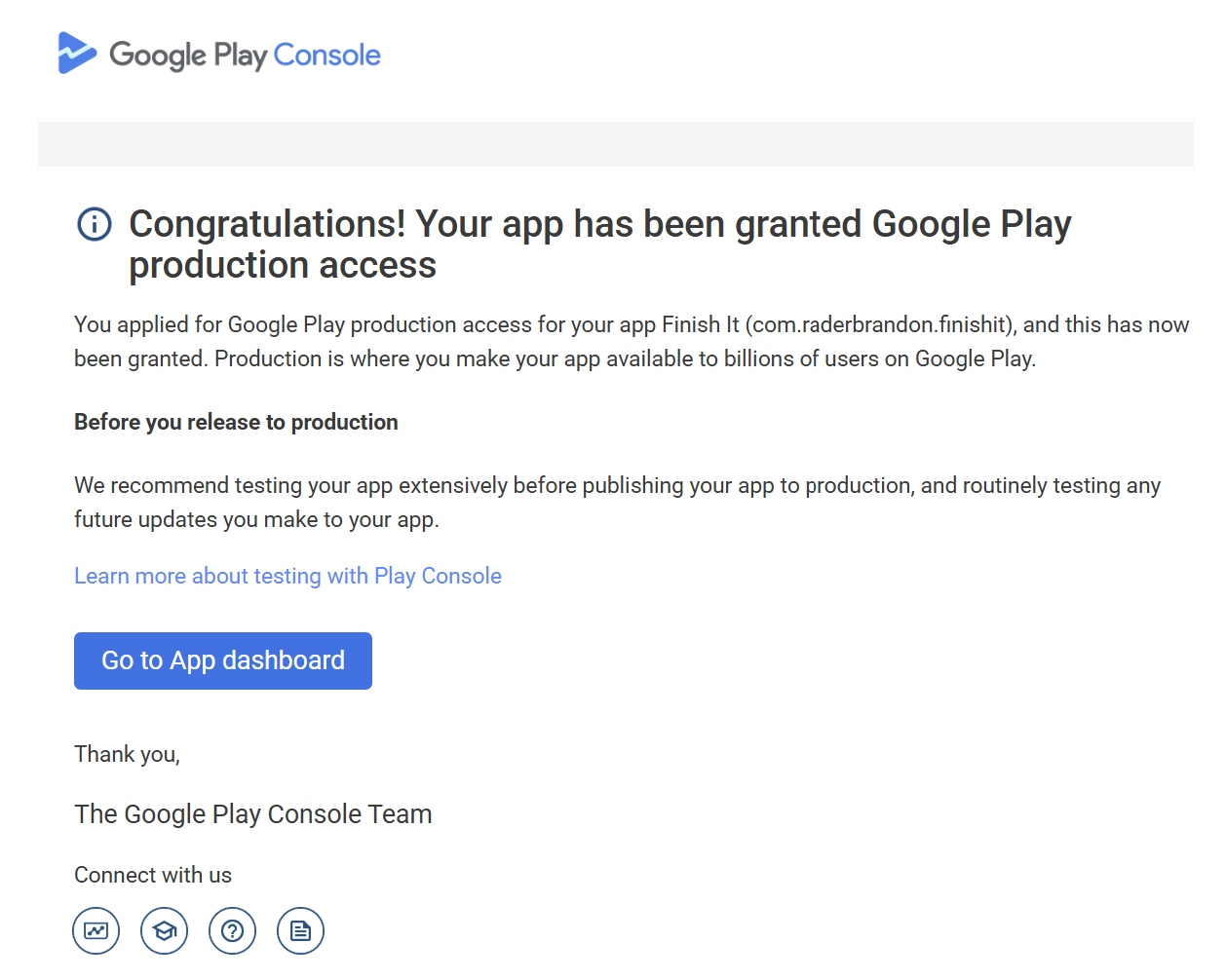
Verified Production Access
Quality QA Testing Reports
Clear, actionable reports with screenshots and evidence for every important issue found during testing.
Real Device Testing & Diagnostics
Real human testers use physical Android devices to test your app, verify real user flows, and provide clear testing evidence and professional QA reports.
Production Access Secured
Get your Android build approved on the first try. We create an audit-ready compliance profile that proves thorough quality assurance.
Affordable Compliance Cycles
Transparent plans built to satisfy Google Play Console guidelines for your Android build.
Loading Packages
Please wait while we fetch the best options for your region...
Frequently Asked Questions
Everything you need to know about passing your closed testing requirements.